

Arknights: Endfield - Introduction to the AIC Report Content
 February 5, 2026February 5, 2026
What is included in the Arknights: Endfield AIC Report? Many players have noticed that current data is below theoretical data and mistakenly believe there is a malfunction. In fact, this is a normal reflection of the resource flow matching mechanism. The Arknights: Endfield AIC Report will explain data definitions, causes of devations, and optimization methods.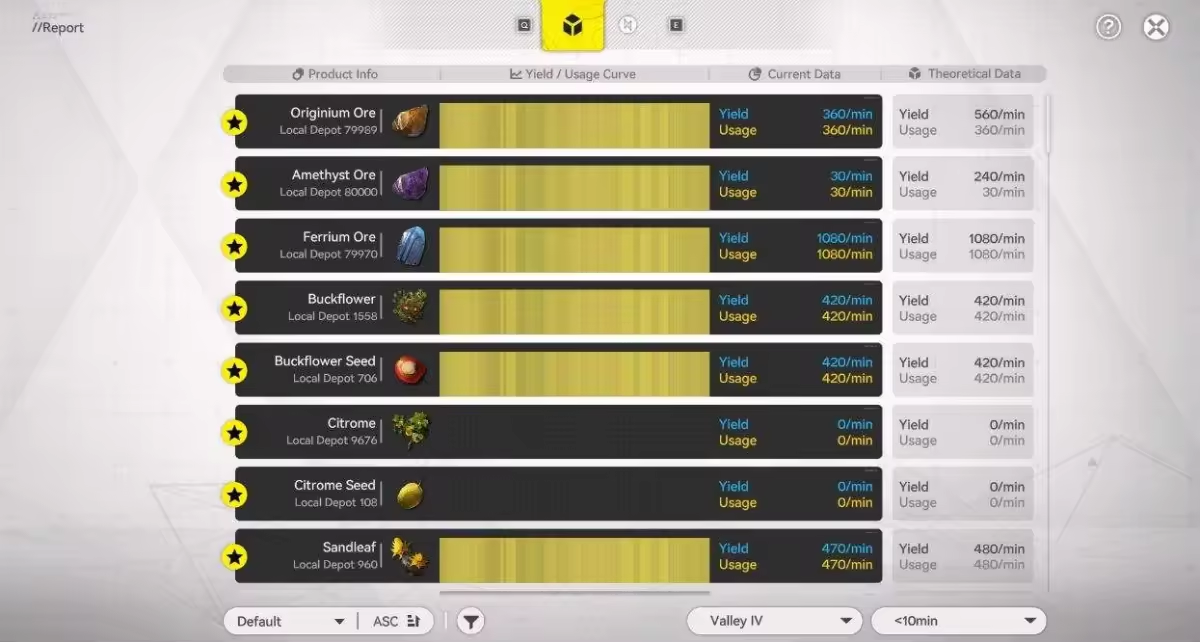
Arknights: Endfield AIC Report Content Introduction
The theoretical data reflects the maximum yield capacity of a single production line under ideal conditions: that is, all prerequisite materials are continuously sufficient, with no interruptions or waiting, and the facility operates at 100% efficiency. Taking the LC Valley Battery as an example, its base production cycle is 10s per unit, resulting in a theoretical conversion rate of 6 units per minute. The current data, however, represents the system's statistical results of actual yield over a past period, influenced by factors such as the stability of upstream resource supply, downstream consumption capacity, and production line startup delays. The difference between the two essentially quantifies the bottleneck links within the resource chain.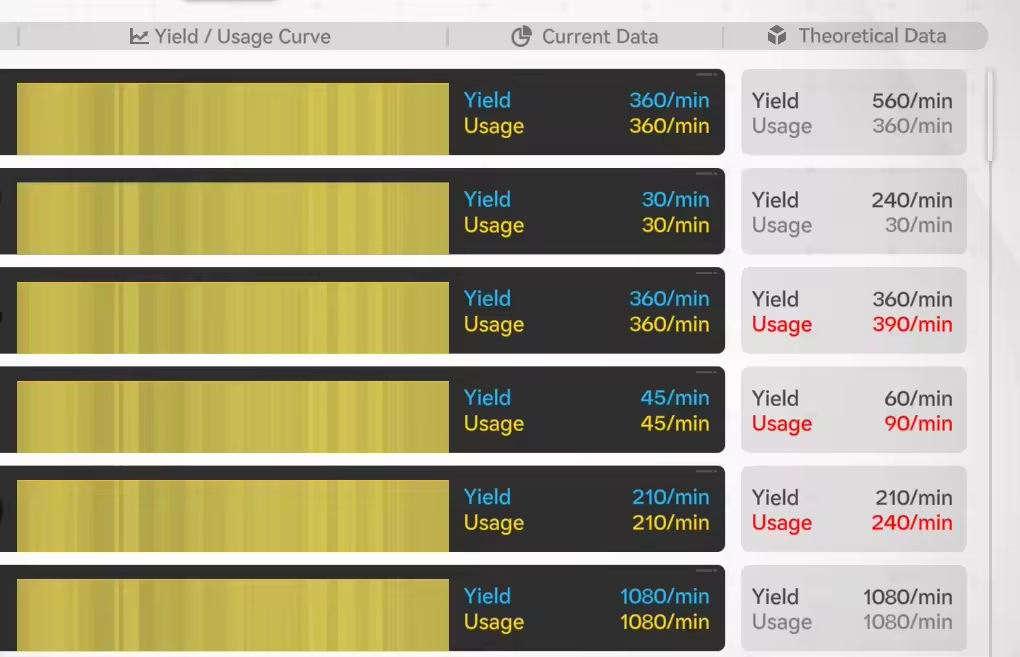
Typical bottleneck scenario: Producing LC Valley Battery requires 5 Amethyst Parts and 10 Originium Powders each. Proportionally, 30 Amethyst Parts and 60 Originium Powders per minute are needed to sustain the output of 6 batteries. If only one Originium Powder production line is deployed (assuming its theoretical yield is 30/min), there will be a 50% shortfall in powder supply, causing the facility to frequently idle. The current yield will be significantly lower than the theoretical yield. The interface displaying "Current Yield = 3" reflects the system's dynamic downscaling due to resource shortages.
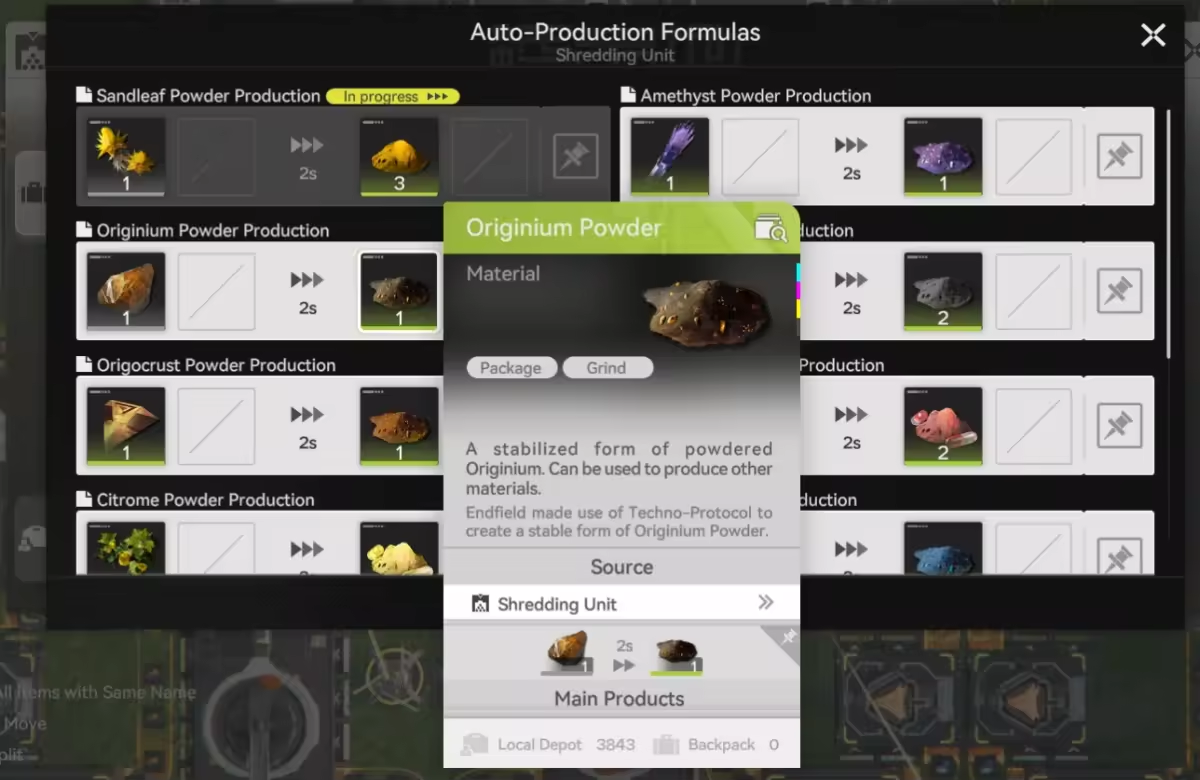
Clear resolution path: specifically supplement the production line for missing resources. In the above case, adding one Originium Powder production line can increase yield capacity to 60 units per minute, meeting battery producing demands. Note that data refresh has an approximately 60-second cache period; after adjustments, wait 1–2 minutes to observe if the current data converges to the theoretical data. This process verifies that the production line is operating at full load stably.
Need more resources quickly? rushbuy.gg offers Arknights: Endfield top-up with easy checkout!
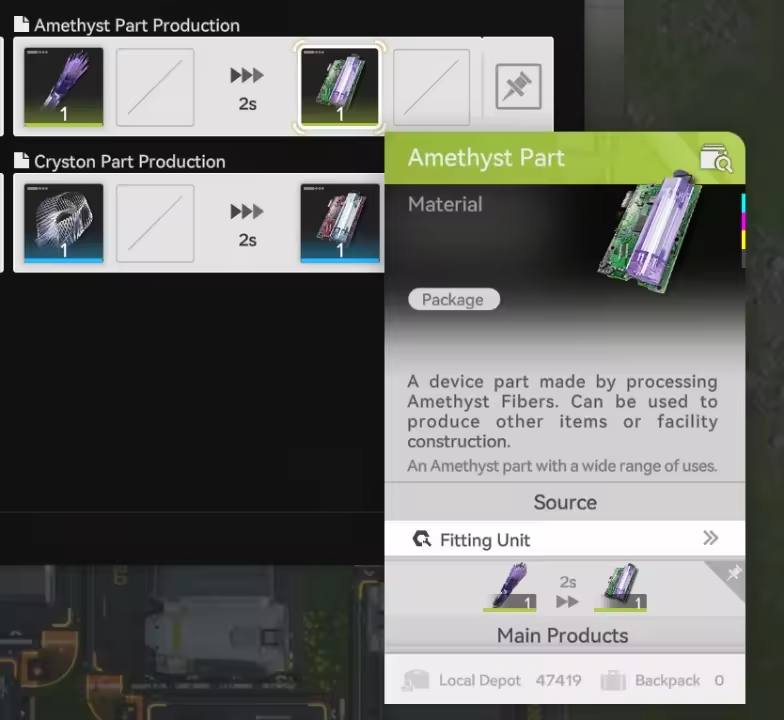
Another common deviation manifests as "theoretical usage > actual usage." This situation indicates that downstream processes have not fully absorbed upstream yield. Possible causes include insufficient number of downstream production lines, raw material shortages within downstream lines themselves (e.g. LC Valley Battery lines lacking Amethyst Parts), or downstream storage capacity reaching its limit. At this point, a reverse trace should be conducted to identify the specific bottleneck—for example, checking whether the input slots of the LC Valley Battery line remain consistently empty, thereby determining whether the issue lies in insufficient yield of Amethyst Parts or if the production line is inactive or its number is insufficient to meet demand.
The criterion for healthy operation is not to pursue absolute maximum yield, but to ensure that "current yield ≥ current usage". As long as the supply side continuously provides materials, the production line can maintain continuous operation even if it does not reach the theoretical peak yield. Conversely, if "current yield ≥ current usage" occurs, it indicates that inventory is being rapidly depleted. Immediate investigation into upstream supply interruptions or downstream overconsumption is required to prevent production line shutdown.
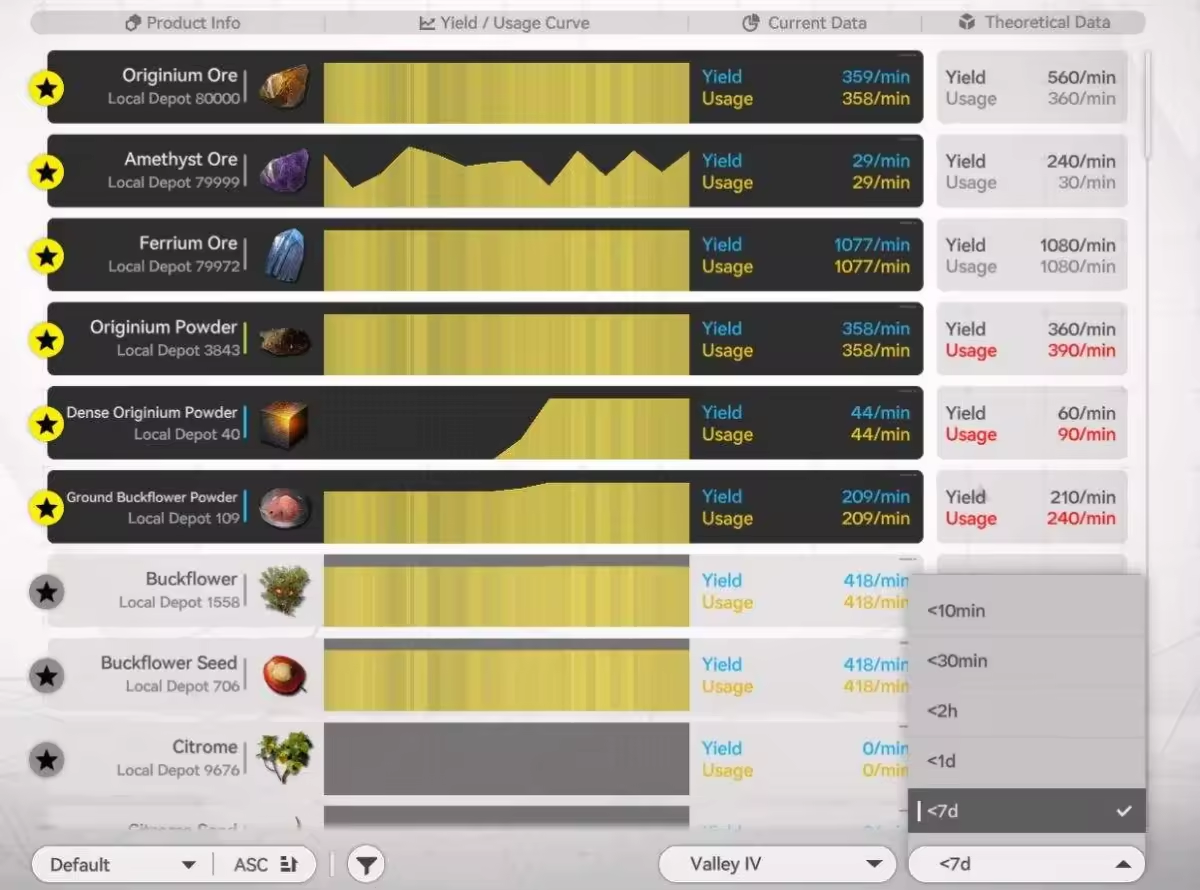
The time filtering feature is often misunderstood as a forecasting tool, but it actually serves as a historical review window. The selectable options of "<10min/<30min/<2h/<1d/<7d" correspond to displaying the average production performance within that time frame. For newly established production lines, if the "<7d" view is selected, the data for the initial days will be zero since the line has not yet been put into operation. The core value of this feature lies in diagnosing stability: for example, when switching to the "<7d" mode, if the current data suddenly drops to zero during a certain period, it indicates an unplanned interruption during that time frame, facilitating review of maintenance operations or scheduling errors.